
This monthly villa maintenance checklist for Dubai homes gives you a monthly routine you can finish in about 30 minutes, without tools and without touching anything that needs a licensed technician. You’ll also find seasonal priorities for Dubai’s climate, a simple way to decide what can wait and what can’t, and a short list to run through before you travel. It’s the same kind of walkthrough we suggest to owners before booking any villa maintenance in Dubai.
Free download
Free Dubai Villa Maintenance Checklist
Want to keep your villa maintenance organised?
Download our free printable Dubai Villa Maintenance Checklist and use it once a month to check your AC, plumbing, electrical warning signs, irrigation, pool, doors, exterior areas and more.
| Area | What to look for |
|---|---|
| AC system | Filter condition, airflow, uneven cooling, new noises, condensation marks |
| Ceilings and walls | New stains, damp patches, bubbling paint, cracks that have grown |
| Plumbing | Moisture under sinks, around toilets and behind washing machines |
| Water pressure and pump | Weaker pressure, a noisy pump, or a pump that runs when no tap is open |
| Bathrooms and drains | Slow drains, failing grout or silicone, water escaping the shower area |
| Electrical points | Warm, buzzing or discoloured sockets and switches, breakers that keep tripping |
| Safety devices | Smoke alarm tests and fault lights |
| Doors and windows | Split seals, doors that stick, hot air coming through gaps |
| Exterior and roofline | New cracks, peeling coatings, blocked drains you can see from the ground |
| Garden and irrigation | Leaking valves, broken sprinkler heads, pooling water, dry patches |
| Swimming pool | Water level, clarity and pump noise |
| Gates and outdoor systems | Gates, garage doors, intercoms and outdoor lights |
| Pests | Droppings or insect trails in kitchens, utility rooms and entry points |
| DEWA usage | Unexplained jumps in water or electricity consumption |
| Last month’s notes | Anything you marked “watch” last time |
One rule before you start: a monthly check is an inspection, not a repair job. Don’t open electrical panels, work near live wiring, dismantle AC units, handle refrigerant or climb onto roof areas that aren’t built for safe access. Your job is to notice, photograph and note. Fixing is for the right specialist.
Looking at the same things once a month gives you something to compare against. A stain that was there in March and hasn’t moved is very different from one that appeared last week and keeps spreading.
Dubai also loads different systems at different times of year. AC runs flat out from May to September, irrigation demand changes with the season, fine dust settles everywhere, and many villas sit empty for weeks over the summer holidays. A short routine keeps you ahead of all of that instead of reacting to it.
Walk the same route through the villa each month. When something looks different, take a photo and write down the date. You don’t need to work out the cause yourself; you just need to notice the change.
Check the filters you can reach safely, compare airflow from room to room, and notice whether any zone now takes longer to cool. Listen for new rattling or grinding, and pay attention to musty smells when the unit starts.
DEWA advises cleaning AC filters periodically, or at least once a month during summer, because clogged filters choke airflow and push up running costs.
If the filter is clean but cooling is still weak, one room behaves very differently from the rest, the unit keeps cutting out, or you see ice forming, it’s time for a technician. Booking professional AC maintenance at that stage is almost always cheaper than waiting for a summer breakdown.
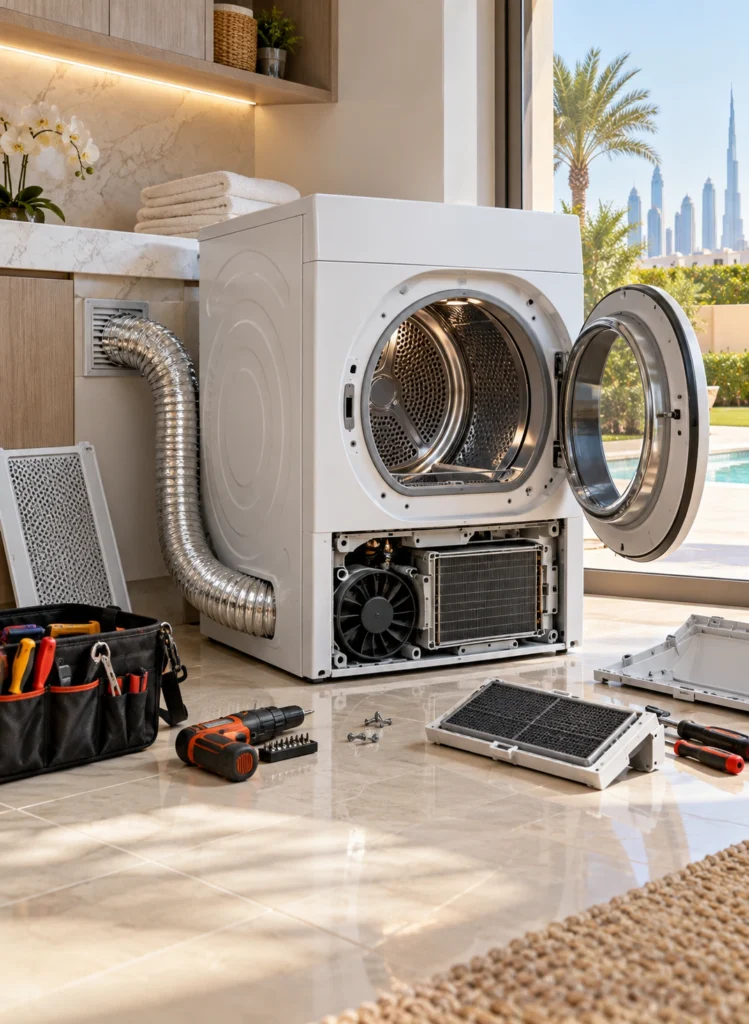
Every AC produces condensation; the question is whether it drains away properly. Look at ceilings near indoor units and around service areas. A fresh yellow ring, bubbling paint, repeated dripping or a damp smell usually points to a blocked drain line or poor insulation.
Don’t wait for next month if water is actively dripping, a stain is spreading, mould is appearing or the ceiling has started to sag.
Open each sink cabinet and look at the flexible hoses, traps and pipe joints. Check around the base of toilets and behind washing machines and dishwashers.
Leaks don’t always leave a puddle. Often the first clue is a swollen cabinet base, peeling laminate or a smell you can’t place. If the same joint keeps getting wet, or damp comes back after you’ve dried it, get it looked at by a villa plumber.
Is the shower weaker than last month? Does the pump kick in when nobody is using water, or run longer than it used to? None of these tells you exactly what’s wrong, but each one is worth following up.
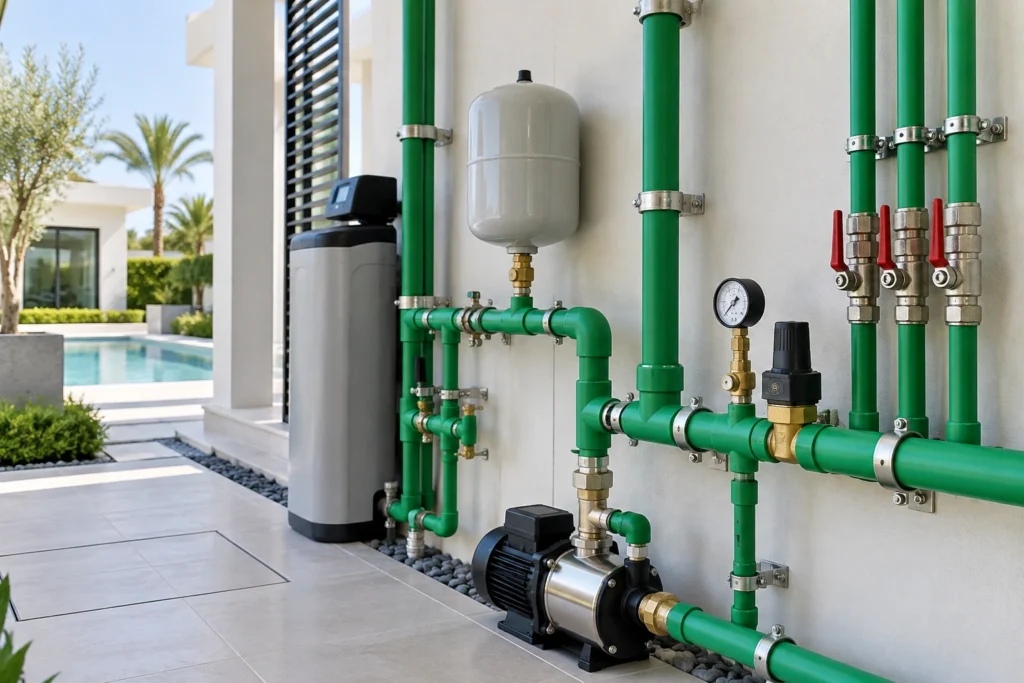
From a safe spot, look at the visible parts of your water tank, pump and water heater for leaks, staining or rust. For water hygiene, Dubai Municipality asks residents to clean and disinfect water tanks and plumbing systems at least every six months using approved companies. You can book water tank cleaning alongside a regular villa clean.
Walk through bedrooms, bathrooms, corridors, the stairwell, and any room below a terrace or roof. You’re looking for anything new or changed: fresh yellowing, blistered paint, crumbling plaster, or a crack that’s longer or wider than in last month’s photo.
A fine hairline crack in plaster is common and rarely serious on its own. A crack that keeps growing, damp that won’t clear, a bulge in the ceiling, or water near light fittings needs faster attention.
Notice whether showers and basins drain at their usual speed. Look closely at silicone lines and grout joints. Gaps, peeling sealant, dark staining that won’t wipe off, or water regularly escaping the shower area can push moisture into walls and floors where you can’t see it.
If a drain stays slow after a simple clean, or damp keeps returning around tiles, book an inspection rather than resealing over the problem.
You don’t need to open anything to spot trouble. During normal use, watch for flickering lights, buzzing switches, cracked or discoloured sockets, plugs that feel hot, a burning smell, or a breaker that trips repeatedly.
Burning smells, scorch marks, sparks or water near electrical fittings are urgent. Switch off what you safely can and call a qualified electrician.
These are easy to forget because you can go months without needing them. Test smoke alarms using the manufacturer’s instructions and check for low-battery or fault lights. If a hard-wired system shows a fault you can’t safely clear, have it checked; don’t disable the warning.
Close the doors and windows you use most and look at the seals. A split weather strip or a draught of hot air makes your AC work harder and lets in more dust. DEWA also recommends weather stripping and caulking around doors and windows to keep cool air in and hot air out.
After rain, check frames for water marks. If a door frame has warped or locks no longer line up, sealant won’t solve it; a carpenter can realign or repair the frame properly.
Stay on the ground. From safe vantage points, look for new cracks, peeling coatings, damaged sealant, staining, loose fixtures and blocked drains you can see. Compare anything odd with last month’s photos.
Exterior paint does more than look good in Dubai: it shields the walls from UV and moisture. Once coatings start flaking or chalking, it’s worth planning exterior villa painting in the cooler months. Roof membranes, parapets and high drains should only be inspected by someone equipped to work at height.
Run each irrigation zone long enough to watch it work. Look for broken sprinkler heads, water spraying onto paving, leaks at valves, puddles that don’t drain, or plants that stay dry while the bed next to them is soaked.
DEWA’s irrigation guidance is simple: check sprinkler valves for leaks, keep heads in good condition, adjust automatic timers with the seasons, and water before 8 am or after 6 pm to cut evaporation. A patch of ground that’s always wet, or a sudden jump in water use, should be investigated rather than fixed by fiddling with the timer.
Compare the water level, clarity and circulation with what you normally see, and listen for changes in pump noise. Keep the equipment area clear so it can be serviced.
Chemistry, filtration repairs and pool electrics belong with a pool technician. Your part is noticing change: water dropping faster than usual, weak circulation, or a pump that suddenly sounds different.
Open and close automatic gates and garage doors. Watch for jerky or slow movement, new noises, poor alignment or safety sensors that don’t respond. Look at outdoor light fittings for damage or exposed wiring without opening them. If anything powered starts moving unpredictably, stop using it until it’s repaired.
Check the places pests like to hide: under kitchen units, utility rooms, around bins, at door thresholds, along garden edges and in rooms you rarely use. Droppings, insect trails, chewed packaging or repeated activity in one spot are early signs, and early is much easier to deal with. Fixing leaks and sealing obvious gaps removes a lot of what pests rely on. For anything persistent, use a licensed pest control company.
Your bills can reveal a problem before you find it. Compare water and electricity use with your normal pattern, allowing for weather, guests and travel. One high month isn’t proof of a fault, but an increase you can’t explain is a reason to look.
DEWA’s Smart Living tools let you track consumption, and its High Water Usage Alert can flag unusual use that may point to a leak inside the property. If water use stays high, check taps, toilets and irrigation first, then arrange leak detection if you can’t find the cause.
Keep Your Villa Maintenance on Track
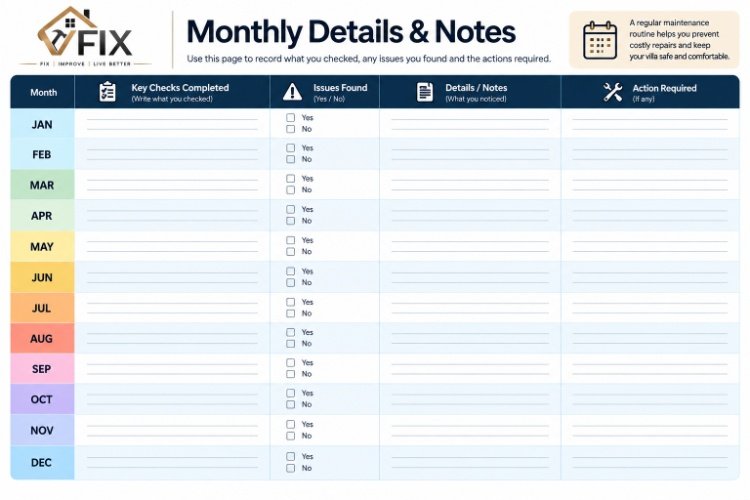
Don’t rely on memory. Download the free VillaFix Dubai Villa Maintenance Checklist and use it every month to record what you’ve checked, what needs watching and what needs professional attention.
Before you finish, look again at anything you marked “watch” last month. Has the crack changed? Is the stain back? Is the pump running more often? Is that one bedroom still slow to cool? This comparison is the most valuable part of the whole routine, because it tells you whether a small issue is stable, improving or getting worse.
| Category | Typical examples | What to do |
|---|---|---|
| Owner check | Filter condition, airflow, visible leaks, stains, door and window seals, irrigation, DEWA usage | Look, photograph and record. Only do simple tasks the manufacturer allows. |
| Professional service | AC servicing and refrigerant, electrical faults, tank disinfection, waterproofing, roof access, pump faults, pool equipment | Book a qualified, licensed or approved specialist. |
| Urgent | Burning smell, sparks, water near electrics, uncontrolled leaks, sagging ceilings, serious cracking, unsafe gates | Stop using the system if it’s safe to do so and get help quickly. |
Not sure who to call? Our villa maintenance services page lists what VillaFix handles in-house.
Keep the monthly checks going all year, but shift your focus with the seasons. Summer stresses AC, water and electrics; the cooler months are the best time for exterior work and waterproofing.
| Months | Main focus | What to check or plan |
|---|---|---|
| January – February | Rain and drainage | New stains after rain, accessible drains, water heater performance, planned repairs while it’s cool |
| March – April | Pre-summer AC | Book a professional AC service before peak demand; check filters, drainage and controls |
| May – August | Peak cooling | Filters monthly, condensation, breaker behaviour, DEWA usage, irrigation efficiency |
| September – October | Post-summer review | AC performance after heavy use, mould or damp signs, tank cleaning due date, damaged seals |
| November – December | Exterior work | Waterproofing checks, sealant repairs, exterior painting, drainage prep, yearly records review |
There’s no single schedule that suits every villa. Age, usage, occupancy, water quality and the manufacturer’s requirements all matter, so treat this as a planning guide.
| System | Recommended approach |
|---|---|
| AC and HVAC | Professional service before summer; filters at least monthly during summer |
| Water tanks | Clean and disinfect at least every six months through a Dubai Municipality approved company |
| Plumbing and pumps | Monthly visual checks; professional diagnosis when pressure, noise or leaks change |
| Electrical | Visual checks only for owners; any fault goes to a qualified electrician |
| Roof and waterproofing | Check after rain; professional inspection when damp appears or coatings age |
| Irrigation | Monthly observation, seasonal timer changes, quick repair of leaks |
| Pool | Follow the equipment schedule plus monthly owner checks |
| Pest control | Monthly monitoring; licensed treatment when activity is found |
| Level | What it means | Examples | What to do |
|---|---|---|---|
| Monitor | Minor, no sign of damage or risk | Cosmetic wear, dust build-up, ageing sealant, a stable hairline crack | Photograph it and recheck next month |
| Book a service | Recurring or getting worse | Slow drains, repeated AC drips, weak airflow, pump cycling, irrigation leaks, damp smells | Arrange an inspection before it gets expensive |
| Act now | Safety risk or active damage | Burning smell, sparks, hot sockets, water near electrics, uncontrolled leaks, sagging ceilings | Stop using the system if safe and get help quickly |
This is a practical VillaFix guide, not an official safety classification. Whenever electrics, structure or water damage are involved, get professional advice.
Fine dust gets into everything. After a heavy dusty spell, give extra attention to:
If cooling drops or equipment starts making new noises, don’t force it to keep running; book a check.
Rain shows you exactly where water gets in. Once it’s safe, check for:
Take photos straight away. Water marks often dry before a technician arrives, and photos help trace where the leak started. Never go onto a wet roof or touch electrical equipment in wet conditions. If damp keeps returning in the same place, it usually points to a waterproofing issue that may need repair or renovation work.
An empty villa lets a small leak or fault run for weeks. Before you travel:
| Area | What to do |
|---|---|
| Water systems | Check taps, toilets, hoses, the water heater, pump and tank for leaks |
| Main water supply | Consider switching it off if your villa and irrigation setup allow |
| AC | Clean accessible filters and set a sensible temperature for an empty home |
| Doors and windows | Make sure everything closes and locks properly |
| Electrical items | Unplug non-essential appliances |
| Garden and pool | Confirm irrigation and pool care will continue safely |
| Monitoring | Turn on DEWA consumption alerts so you can spot changes remotely |
| Access | Leave keys or access details with a trusted contact or your maintenance provider |
| Approach | Works well when | Check before choosing |
|---|---|---|
| Annual Maintenance Contract (AMC) | You want scheduled visits, one point of contact and a service history | What’s included and excluded, emergency response times, parts cover, visit frequency, renewal terms |
| Pay per repair | You’re happy to arrange work only when something goes wrong | Response times, contractor reliability, repair costs, and keeping your own records |
The label matters less than the habit. A well-kept villa needs regular inspections, clear records and a quick way to deal with small problems. If you’d like to talk through which option suits your villa, get in touch with VillaFix.
Once a month is a good rhythm for most owners. The aim isn’t to fix everything yourself but to spot changes early: new noises, leaks, stains, weaker cooling, pressure changes or higher bills. Professional servicing should follow each system’s own schedule.
DEWA recommends cleaning them periodically and at least once a month in summer. Follow your unit’s manual and only clean filters you can reach safely. If cooling stays weak afterwards, book an inspection.
Dubai Municipality advises cleaning and disinfecting water tanks and plumbing systems at least every six months, using approved companies.
Common signs include a water bill that jumps for no reason, damp or swollen cabinets, falling water pressure, a pump that runs often, ceiling stains, wet patches outside, or the sound of running water when every tap is closed. One sign alone doesn’t confirm a leak, but repeated signs should be investigated.
Focus on AC performance and filters, condensation drainage, door and window seals, irrigation efficiency and any electrical warning signs. Book your AC service in March or April, before technicians get busy.
It can be if you want scheduled inspections, maintenance records, one contact for everything, or cover while you travel. Before signing, check exactly which systems are covered, the exclusions and the emergency response terms.
Maintenance is the regular inspection, cleaning and servicing that keeps systems working. Repairs happen after something has failed. Good maintenance reduces how often, and how expensively, you need repairs.
Check monthly. Call us when it matters.
Regular checks help you spot problems early, but some maintenance requires professional inspection and repair.
Download the free checklist to keep track of your villa every month, or book a free VillaFix site visit if you’ve identified an issue that needs professional attention.